
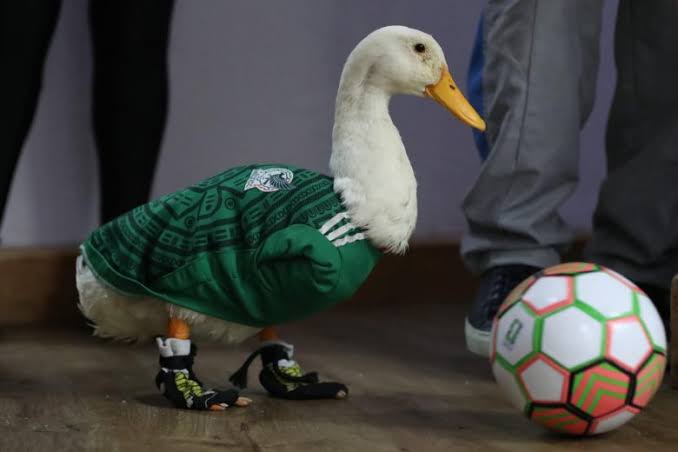
In a Tournament Filled with Superstars, One Duck Has Stolen the Spotlight
The FIFA World Cup 2026 has already given football fans unforgettable moments.
Lionel Messi continues to amaze. Jude Bellingham is emerging as one of the faces of the next generation. Mexico’s passionate supporters have transformed Estadio Azteca into one of the most electrifying venues on Earth.
Yet somehow, one of the tournament’s biggest stars isn’t a footballer.
He’s a duck.
His name is Merlin.
And during the first weeks of the FIFA World Cup 2026, Merlin the Duck has become one of the most beloved and unexpected stories of the entire tournament.
From fan zones in Mexico City to social media feeds around the world, Merlin has evolved from a local curiosity into a global football sensation. Videos featuring the friendly duck have accumulated millions of views. Television broadcasts have featured him. Supporters from dozens of countries now wear Merlin merchandise, wave Merlin flags, and pose for photos with Merlin-themed signs.
In a World Cup filled with elite athletes and billion-dollar spectacles, a duck from Mexico City has captured the hearts of football fans everywhere.
How did this happen?
The answer says a great deal about football, community, and the unique spirit of the World Cup.

The Origins of Merlin
Long before becoming famous, Merlin was simply a familiar sight around parts of Mexico City.
Known among local residents and visitors for his calm personality and unusual comfort around people, Merlin became something of a neighborhood celebrity. Children loved him. Street vendors knew him. Tourists often stopped to take photographs.
But no one imagined that Merlin would become internationally known.
That changed when World Cup preparations began transforming Mexico City into one of the focal points of the tournament.
As visitors arrived from around the globe, photos and videos of Merlin started appearing online. At first, the posts attracted only modest attention.
Then something remarkable happened.
Football fans began sharing them.
A lot.
The Perfect World Cup Character
Part of Merlin’s appeal is that he embodies many of the qualities people love most about the World Cup itself.
The tournament brings together nations that often speak different languages, follow different traditions, and view the world differently.
Yet for one month, football creates a common connection.
Merlin somehow became a symbol of that spirit.
Supporters from Argentina, Japan, Morocco, Germany, Mexico, Canada, South Korea, England, and dozens of other countries all found something charming about him.
Unlike players, Merlin belongs to no national team.
Unlike coaches, he has no tactical agenda.
Unlike commentators, he has no opinions about referees.
Everyone can claim Merlin as their own.
That universal appeal has become a major reason for his popularity.
Social Media Did the Rest
Every World Cup creates viral moments.
This year, many of those moments involve Merlin.
One widely shared video showed supporters from six different countries taking turns posing with a Merlin statue near a fan zone.
Another showed children teaching visitors from Europe how to imitate Merlin’s distinctive walk.
A third featured supporters chanting his name after a dramatic late goal during a watch party in Mexico City.
The clips spread rapidly.
Soon major football pages began posting Merlin content.
Then broadcasters joined in.
Before long, millions of football fans knew exactly who Merlin was.
In a digital age where attention spans are increasingly short, Merlin offered something refreshingly simple:
Joy.
Why Football Fans Needed Merlin
Every World Cup contains tension.
Supporters experience enormous emotional swings. Victories create euphoria. Defeats create heartbreak.
The pressure on players can be immense.
For fans, the emotional intensity is part of what makes the tournament special.
Yet that intensity can also become exhausting.
Merlin provides something different.
He reminds supporters that football is supposed to be fun.
His popularity reflects a broader desire among many fans to celebrate the lighter side of the sport.
While debates rage about tactics, referees, group standings, and tournament favorites, Merlin offers a welcome break.
He simply exists to make people smile.
And during a month-long tournament, that matters more than many people realize.
A Symbol of Mexico City’s World Cup Spirit
The World Cup is not only about football.
It is also about host cities.
Every host city develops its own identity during the tournament.
In 2026, Mexico City has embraced its role as one of the spiritual centers of the competition.
The city offers extraordinary food, rich history, passionate football culture, and unforgettable atmosphere.
Merlin has become part of that identity.
Many visiting supporters now associate him with their World Cup experience in Mexico.
For thousands of visitors, Merlin represents hospitality, friendliness, and the welcoming energy that has defined the city throughout the tournament.
In that sense, he has become an ambassador not only for football, but also for Mexico City itself.

Players Have Started Noticing
One of the most fascinating aspects of Merlin’s rise is that players have begun acknowledging the phenomenon.
Several national team players have mentioned Merlin during interviews.
Others have posed with Merlin-themed gifts from supporters.
While football stars usually dominate headlines during a World Cup, many seem genuinely amused by the duck’s growing popularity.
That reaction has only strengthened Merlin’s status.
After all, if some of the world’s best footballers are talking about him, fans naturally become even more interested.
The Unofficial Mascot of World Cup 2026?
Every major tournament has iconic symbols.
The official mascots are carefully designed and heavily promoted.
But sometimes fans choose their own symbols.
Many supporters now jokingly refer to Merlin as the “unofficial mascot” of FIFA World Cup 2026.
Whether that title is deserved depends on whom you ask.
What is undeniable is that Merlin has become one of the most recognizable non-football figures associated with the tournament.
His image appears on signs, social media posts, fan artwork, memes, and unofficial merchandise.
That level of organic popularity cannot be manufactured.
It has to happen naturally.
And that is precisely what makes Merlin’s story so compelling.
Why Merlin’s Story Matters
At first glance, the popularity of a duck may seem trivial compared to the football itself.
But Merlin’s story reveals something important about why people love the World Cup.
The tournament is not only a sporting competition.
It is a global cultural event.
The memories people cherish often extend far beyond goals and trophies.
Fans remember the cities they visited.
The people they met.
The food they tried.
The songs they sang.
The unexpected moments that made them smile.
Merlin has become one of those moments.
Years from now, many supporters may forget individual group-stage results.
But they will remember the duck who somehow became famous during the summer of 2026.
What Happens After the World Cup?
That may be the most interesting question of all.
Some World Cup stories disappear when the tournament ends.
Others become part of football folklore.
Merlin appears to have a good chance of joining the second category.
His popularity now extends far beyond Mexico City.
Supporters around the world recognize him.
Children love him.
Social media continues to amplify his story.
Whether Merlin remains famous after the final match remains to be seen.
But one thing is already certain:
No one expected a duck to become one of the defining stories of FIFA World Cup 2026.
Yet here we are.
Final Thoughts
The greatest World Cups always produce unexpected heroes.
Sometimes they are players.
Sometimes they are teams.
Sometimes they are moments.
And occasionally, they are ducks.
Merlin the Duck has become a reminder that football’s greatest strength is its ability to bring people together.
In a tournament filled with elite athletes, dramatic matches, and global superstars, Merlin represents something wonderfully simple:
The joy of being a football fan.
And that may be why the world has fallen in love with him


