
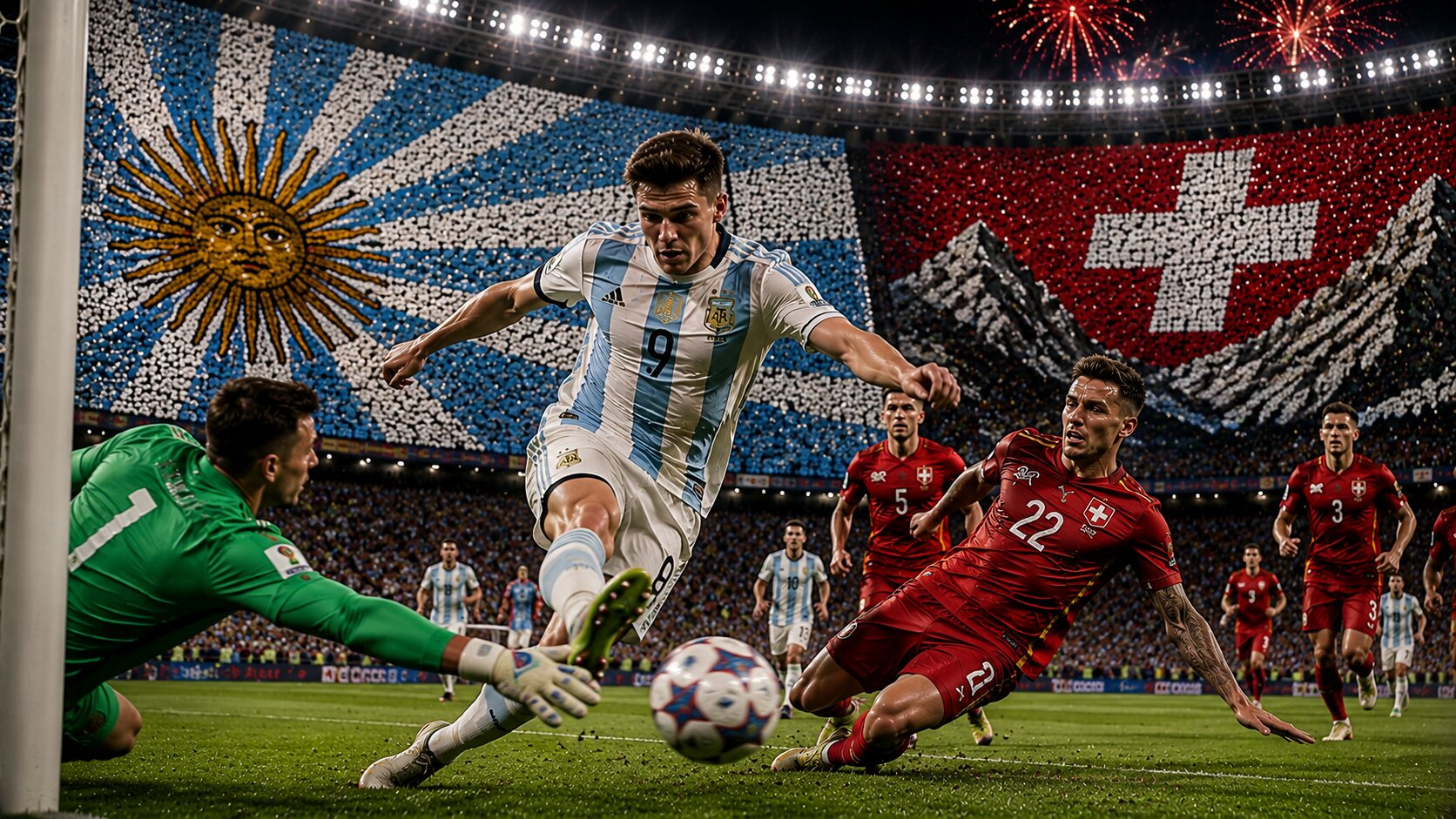
Argentina 3-1 Switzerland World Cup 2026: Álvarez and Lautaro Send Argentina Into World Cup 2026 Semifinal
Argentina is headed to the semifinals of the 2026 FIFA World Cup after defeating Switzerland 3-1 after extra time in a dramatic quarterfinal that tested the defending champions in every possible way.
For more than 110 minutes, Switzerland looked capable of producing one of the tournament’s biggest upsets. Organized, disciplined and fearless, the Swiss frustrated Argentina for long stretches and even forced the South Americans into another tense knockout battle. But once again, Argentina found a way to survive.
An early goal from Alexis Mac Allister gave Argentina the lead, but Dan Ndoye’s second-half equalizer pushed the match into extra time. Switzerland then suffered a major setback when Breel Embolo was sent off, and Argentina eventually broke through thanks to a spectacular strike from Julián Álvarez before Lautaro Martínez sealed the victory in stoppage time.
The result sends Argentina into a blockbuster semifinal against England, while Switzerland exits the tournament with enormous credit after one of the finest World Cup campaigns in its history.
Argentina Starts Fast
After their dramatic comeback victory against Egypt in the Round of 16, Argentina entered the quarterfinal determined to avoid another slow start.
The defending champions immediately took control of possession and attempted to pin Switzerland deep inside its own half. Lionel Messi dropped into midfield to help orchestrate attacks, while Argentina’s fullbacks pushed high to stretch the Swiss defensive structure.
The early pressure paid off.
In the 10th minute, Alexis Mac Allister headed home from a Messi corner kick to give Argentina a 1-0 lead. The goal appeared to confirm what many observers expected: that Argentina’s superior talent would eventually overwhelm the Swiss defense.
At that stage, Argentina looked comfortable.
The midfield controlled possession, Messi was finding space, and Switzerland appeared destined for a long evening of defending.
But the Swiss had other ideas.
Switzerland Refuses to Break
One of the defining characteristics of Switzerland’s tournament has been its discipline.
The team did not panic after conceding early. Instead, coach Murat Yakin’s players remained committed to the tactical approach that had carried them past Algeria and Colombia.
The Swiss defensive block stayed compact.
Rather than chasing the ball recklessly, Switzerland concentrated on denying Argentina access to dangerous central areas. Whenever Messi received possession, multiple defenders closed passing lanes around him.
Gradually, the match became more balanced.
Argentina still controlled possession, but the opportunities became less frequent. Switzerland’s midfield worked tirelessly to disrupt combinations and force Argentina into wider positions.
The first half ended with Argentina leading, but Switzerland had successfully transformed the match into the type of low-margin contest it preferred.
Tactical Battle Takes Center Stage
The middle portion of the match became a fascinating chess match between the two coaching staffs.
Argentina wanted to accelerate the tempo and create spaces between Switzerland’s defensive lines.
Switzerland wanted to slow everything down.
The Swiss frequently defended with numbers behind the ball and waited patiently for transition opportunities. Their strategy was simple but effective: remain organized, frustrate Argentina, and capitalize on mistakes.
Argentina’s midfield continued circulating possession, but clear chances were difficult to find.
The defending champions looked dangerous without looking dominant.
That distinction became increasingly important as the second half progressed.
Ndoye Changes the Match
Switzerland’s patience was rewarded in the 67th minute.
Dan Ndoye found the equalizer, stunning the Argentine supporters and completely changing the emotional landscape of the quarterfinal.
The goal reflected Switzerland’s persistence.
The Swiss had spent much of the match absorbing pressure, but they remained alert whenever opportunities emerged. Ndoye’s finish rewarded a performance built on concentration and tactical discipline.
For Argentina, the equalizer created familiar concerns.
Against Cabo Verde, Argentina had struggled defensively.
Against Egypt, Argentina needed a late comeback.
Now Switzerland had erased an Argentine lead and suddenly looked capable of completing an upset.
The quarterfinal had become a genuine battle.
Messi’s Influence Beyond Goals
Although Messi did not score, his impact on the match remained significant.
The Argentine captain provided the assist for Mac Allister’s opening goal and continuously served as the focal point of Argentina’s attack. His movement forced Switzerland’s defenders into difficult decisions, while his passing created opportunities that few players in world football can envision.
What makes Messi so valuable at this stage of his career is not simply goal scoring.
It is control.
When Argentina faced difficult moments, the ball inevitably found its way to Messi. His ability to slow the game, accelerate attacks, and maintain possession helped prevent Switzerland from gaining sustained momentum.
Even in a match where others ultimately scored the decisive goals, Messi remained central to Argentina’s success.
The Embolo Controversy
One of the most debated moments of the match involved Swiss forward Breel Embolo.
During the second half, Embolo received a second yellow card after a controversial VAR review determined that he had simulated contact inside the penalty area. The decision reduced Switzerland to ten men and dramatically altered the final stages of the quarterfinal.
The decision immediately generated debate.
From Switzerland’s perspective, the dismissal felt harsh and arrived during a period when the team appeared increasingly confident.
For Argentina, the numerical advantage provided an opportunity to apply greater pressure.
Yet even after the red card, Switzerland continued defending courageously and forced the match into extra time.
That resilience deserves recognition.
Many teams would have collapsed.
Switzerland refused to do so.
Álvarez Produces the Moment of Magic
For much of extra time, Switzerland’s resistance continued.
The ten-man Swiss defended heroically and appeared increasingly likely to force a penalty shootout.
Then came the moment that changed everything.
In the 112th minute, Julián Álvarez unleashed a stunning long-range strike that finally broke Switzerland’s resistance and gave Argentina a 2-1 lead.
It was the type of goal that decides major tournaments.
The finish combined technique, confidence and composure under enormous pressure.
After more than 100 minutes of frustration, Argentina finally had the breakthrough it desperately needed.
The reaction was immediate.
Players, coaches and supporters celebrated with the intensity of a team that understood how close it had come to elimination.
Lautaro Finishes the Job
Switzerland had no choice but to attack after falling behind.
That decision created space.
Argentina exploited it.
Deep into extra-time stoppage time, Lautaro Martínez added a third goal that made the final scoreline appear more comfortable than the match actually was.
The goal effectively ended the contest.
Switzerland’s extraordinary resistance was finally broken.
Argentina had survived another knockout scare.
Video Argentina 3-1 Switzerland World Cup 2026 Match Goals and Extended Highlights
Outstanding Performances
Julián Álvarez
The match winner.
His 112th-minute strike will be remembered as one of the defining moments of Argentina’s World Cup campaign. When the defending champions needed inspiration, Álvarez delivered.
Lionel Messi
While he did not score, Messi’s assist, leadership and playmaking were crucial. He remained Argentina’s creative engine and continually demanded Switzerland’s attention.
Alexis Mac Allister
His early goal gave Argentina control and prevented the match from becoming even more complicated. He also contributed significantly in midfield throughout the evening.
Dan Ndoye
Switzerland’s best attacking performer.
His equalizer transformed the match and nearly helped produce one of the tournament’s great upsets.
Switzerland’s Defense
Even in defeat, Switzerland’s defensive organization was exceptional. For long stretches, the Swiss frustrated one of the world’s most talented attacking teams.
Why Argentina Won
The result ultimately came down to three factors.
First, Argentina possessed superior attacking quality.
Switzerland defended brilliantly, but players like Messi, Álvarez and Lautaro Martínez can create decisive moments from limited opportunities.
Second, the Embolo red card shifted momentum toward Argentina. While Switzerland remained competitive, defending with ten men against Argentina for such a long period inevitably increased the pressure.
Third, Argentina’s experience mattered.
This team has repeatedly survived difficult knockout matches. Even when performances have not been perfect, the players remain calm under pressure.
That composure was visible again in Kansas City.
What This Means for Argentina
The victory keeps Argentina’s dream of back-to-back World Cup titles alive.
However, the quarterfinal also reinforced concerns that have followed the team throughout the tournament.
Argentina continues finding ways to win, but many of those victories have required dramatic comebacks, extra time, or late heroics. Critics argue that the defending champions have not consistently displayed the dominance expected from a team of their talent.
Still, winning knockout matches is ultimately what matters.
Argentina is now one of the final four teams remaining.
Looking Ahead: Argentina vs England
The semifinal against England promises to be one of the most anticipated matches of World Cup 2026.
England arrives after a 2-1 extra-time victory over Norway. Like Argentina, the Three Lions have repeatedly demonstrated resilience under pressure.
The matchup will feature world-class talent across the field, but much attention will focus on Messi and England’s emerging superstar Jude Bellingham.
Argentina’s attack will challenge England’s defense.
England’s physicality and midfield strength will challenge Argentina.
The quarterfinal against Switzerland showed both Argentina’s strengths and vulnerabilities.
If the defending champions can combine their resilience with a more complete performance, they will have every chance of reaching another World Cup final.
If they continue relying on late drama, England may prove a much more difficult obstacle to overcome.
Keep up with TheWorldCup2026.com!


