
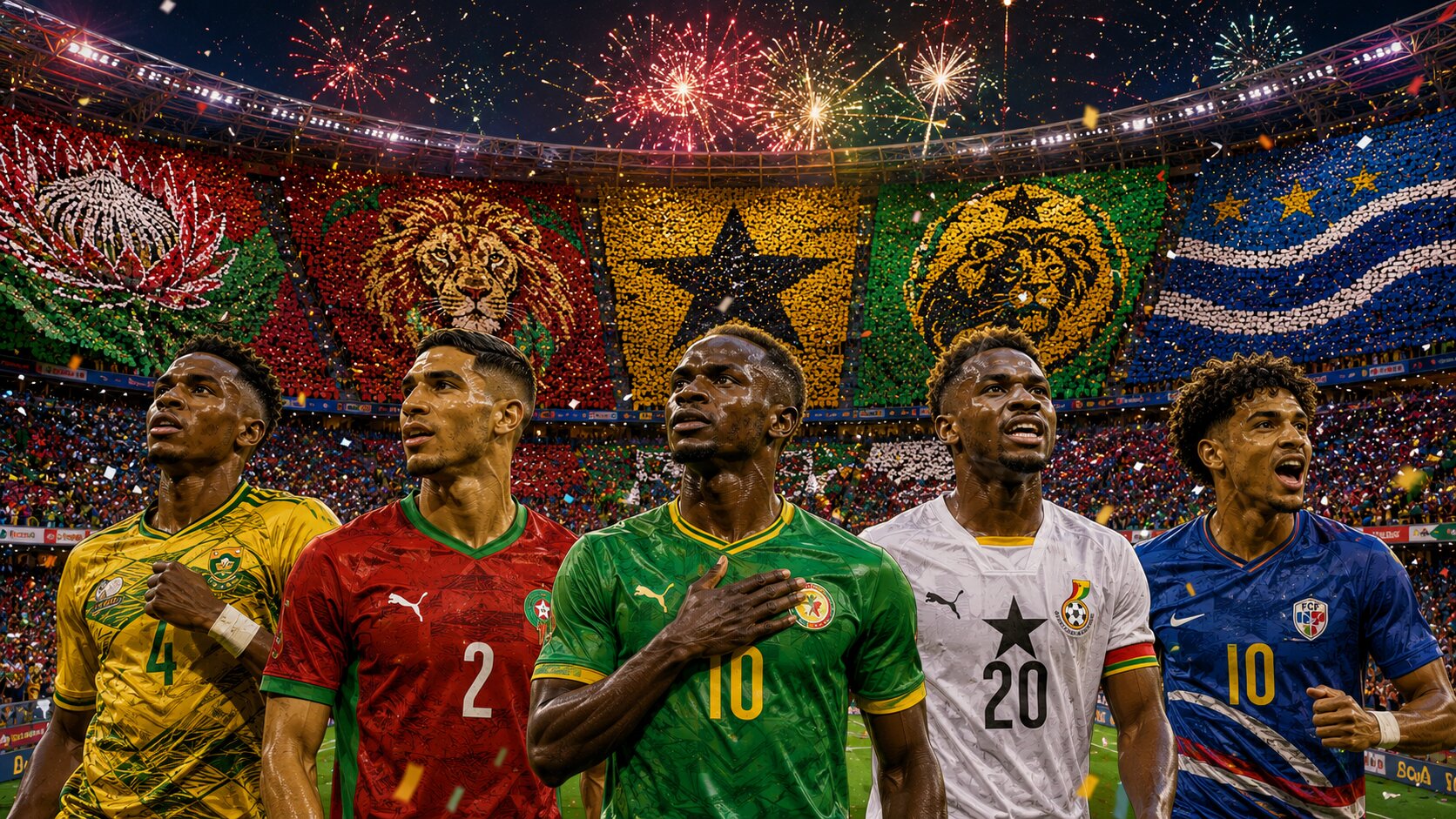
African Nations at World Cup 2026 group stage. What have learned about them in comparison to performances in past World Cups?
Africa Leaves Its Mark on World Cup 2026
When the group stage of FIFA World Cup 2026 began, many observers wondered whether African football could build upon the remarkable achievements of recent tournaments.
The answer, after three weeks of competition, is a resounding yes.
Africa may not have produced the tournament favorite.
It may not have dominated the headlines in the same way as Argentina, France, Brazil, or Spain.
Yet the collective performance of African nations has once again demonstrated that the continent continues to close the gap with football’s traditional powers.
Some African teams exceeded expectations.
Others suffered disappointing exits.
Several players emerged as global stars.
And perhaps most importantly, African football once again showed that it belongs among the elite regions of the world game.
The story of Africa at World Cup 2026 is one of progress, resilience, and growing ambition.
South Africa: The Pride of the Continent
No African nation achieved more than South Africa.
Entering the tournament with relatively modest expectations, Bafana Bafana became one of the most admired teams of the group stage.
South Africa’s journey was built on organization, discipline, and belief.
The team secured qualification for the knockout stage and ultimately pushed Canada to the very limit before suffering a heartbreaking 1-0 defeat in stoppage time.
What impressed observers most was not simply the results.
It was the manner in which South Africa competed.
The team rarely looked intimidated.
The players displayed tactical discipline and emotional maturity.
Against stronger opponents on paper, South Africa consistently found ways to remain competitive.
Goalkeeper Ronwen Williams emerged as one of the standout performers of the tournament. His leadership, reflexes, and composure repeatedly kept South Africa alive during difficult moments.
The knockout-stage elimination against Canada was painful.
Yet South Africa leaves the tournament with enhanced prestige and renewed confidence about its future.
Morocco Continues to Prove 2022 Was No Accident
Four years ago, Morocco stunned the football world by reaching the semifinals of the World Cup.
Some wondered whether that achievement was a unique moment unlikely to be repeated.
World Cup 2026 has provided a clear answer.
Morocco remains one of the strongest football nations on the planet.
The Atlas Lions once again demonstrated defensive discipline, tactical intelligence, and technical quality throughout the group stage.
Their ability to combine European-level organization with African athleticism continues to make them one of the most difficult teams to face.
Perhaps the greatest compliment one can give Morocco is this:
Nobody wants to play them.
That alone speaks volumes about the respect they have earned globally.
Senegal Remains a Continental Power
Senegal entered the tournament carrying the expectations that accompany one of Africa’s most consistent football programs.
While the campaign did not always produce spectacular football, the Senegalese once again demonstrated why they remain among Africa’s elite.
Physical strength.
Tactical flexibility.
Defensive resilience.
These characteristics continue to define Senegal’s football identity.
The squad may not possess the same star power that existed during previous generations, but the collective quality remains extremely high.
Senegal’s performance reinforced a broader trend.
African football is increasingly producing teams that are difficult to beat rather than merely exciting to watch.
That evolution is helping African nations compete more effectively against elite opposition.
Ghana’s Return to Relevance
One of the most encouraging African stories of the tournament has been Ghana.
The Black Stars have a rich World Cup history, including their famous run to the quarterfinals in 2010.
Recent years, however, have been less successful.
World Cup 2026 has suggested that Ghana may be returning to prominence.
The team demonstrated impressive athleticism and defensive commitment throughout the group stage.
Most importantly, Ghana showed resilience.
The players consistently responded well to adversity and earned crucial results when pressure was highest.
Their qualification for the knockout stage has reminded supporters around the world why Ghana remains one of Africa’s most respected football nations.
Cape Verde: The Cinderella Story That Captured the World
Although geographically small, Cape Verde became one of the biggest stories of the entire tournament.
With a population of less than one million people, the island nation achieved what many considered impossible.
Qualification for the knockout stage.
Second place in a difficult group.
Global admiration.
The Blue Sharks played fearless football throughout the group stage.
Their organization frustrated larger opponents.
Their confidence grew with every match.
Their supporters became favorites among neutral fans.
Cape Verde’s success represents more than a sporting achievement.
It demonstrates how modern football increasingly rewards tactical preparation, team chemistry, and belief.
The nation has already secured its place among the most inspiring stories of World Cup 2026.
The Outstanding African Players
Several African footballers used this tournament to elevate their international reputations.
Ronwen Williams (South Africa)
Few goalkeepers performed better during the group stage.
Williams repeatedly delivered crucial saves and provided exceptional leadership.
Without him, South Africa likely would not have reached the knockout stage.
Achraf Hakimi (Morocco)
The Moroccan star once again demonstrated why he is considered one of the world’s premier fullbacks.
His ability to contribute defensively while also supporting attacks remains extraordinary.
Mohammed Kudus (Ghana)
Kudus emerged as one of Africa’s most dangerous attacking players.
His creativity, pace, and willingness to take risks consistently troubled opposing defenses.
Cape Verde’s Collective Heroes
One of the most remarkable aspects of Cape Verde’s success was the absence of a single dominant superstar.
Instead, the team succeeded through collective effort.
That unity became one of the defining themes of their campaign.
The Biggest African Disappointments
Not every African story was positive.
Several teams entered the tournament with high expectations but failed to meet them.
Egypt
Perhaps the greatest disappointment among African nations.
Egypt possessed talent, experience, and ambitious expectations.
Yet the performances often lacked consistency.
The team struggled to impose itself against stronger opponents and frequently appeared unable to control matches for extended periods.
For a nation with Egypt’s football tradition, expectations are always high.
Many supporters expected more.
Ivory Coast
The Ivorians showed flashes of quality but never fully convinced.
At times, the team looked capable of competing with elite opposition.
At other moments, concentration lapses and inconsistency undermined progress.
The talent exists.
The challenge remains translating that talent into sustained tournament success.
Individual Disappointments
Several highly regarded players entered the tournament carrying significant expectations but struggled to influence matches consistently.
Some attackers failed to convert opportunities.
Some midfield stars disappeared during crucial moments.
These disappointments are inevitable in a tournament environment where margins are extremely small.
Video African Nations at World Cup 2026
What Have We Learned About African Football?
Perhaps the most important conclusion is that African football continues evolving.
Historically, African teams were often praised for athleticism, passion, and flair.
They were not always praised for tactical discipline.
That stereotype is becoming increasingly outdated.
World Cup 2026 revealed African teams that are:
Better organized.
More tactically sophisticated.
More disciplined defensively.
More comfortable controlling matches.
This evolution matters enormously.
The gap between African football and traditional European or South American powers continues narrowing.
Several African teams now enter tournaments expecting success rather than merely hoping for it.
That psychological change may be just as important as any tactical development.
Comparing 2026 to Previous World Cups
The overall performance of African nations compares favorably with many previous tournaments.
In earlier eras, African success often depended upon one exceptional team carrying the continent’s hopes.
Cameroon in 1990.
Senegal in 2002.
Ghana in 2010.
Morocco in 2022.
World Cup 2026 felt different.
Success was more broadly distributed.
Multiple African nations performed well.
Multiple African nations advanced.
Multiple African nations earned worldwide respect.
This broader competitiveness suggests that African football development is becoming more sustainable.
The success is no longer concentrated in one program.
It is spreading across the continent.
Looking Ahead to 2030
The future appears bright.
Young African players increasingly compete for major European clubs.
Coaching standards continue improving.
Domestic federations are investing more heavily in development.
The results are becoming visible.
It is no longer unrealistic to imagine an African nation reaching a World Cup final in the coming years.
In fact, it increasingly feels inevitable.
The question may no longer be whether an African nation can win the World Cup.
The question may be when.
Final Thoughts
The story of Africa at World Cup 2026 is ultimately a story of progress.
South Africa inspired.
Morocco impressed.
Senegal remained consistent.
Ghana reemerged.
Cape Verde captured hearts around the world.
There were disappointments, particularly for Egypt and Ivory Coast.
There were moments of heartbreak.
There were moments of glory.
Most importantly, there was evidence that African football continues moving forward.
The continent leaves World Cup 2026 with greater respect, greater visibility, and greater confidence than ever before.
The next great African World Cup achievement may already be on the horizon.
And after watching these performances, few would be surprised if history arrives sooner rather than later.
Finds lots more World Cup 2026 information, analysis, highlights in TheWorldCup2026.com


