
England 2-0 Panama World Cup 2026: If England does not improve significantly …
England Won the Match. But Did They Answer the Bigger Questions?
England did what it needed to do.
That may be the most generous way to describe the Three Lions’ 2-0 victory over Panama at FIFA World Cup 2026.
The scoreline looks comfortable enough. A two-goal victory. A clean sheet. Qualification secured. Momentum, at least on paper, restored before the knockout stage.
But anyone who watched the match closely knows the performance was far from convincing.
Panama, already fighting against long odds, played with courage, discipline, and pride. England, despite possessing one of the most talented squads in the tournament, once again struggled to produce the kind of fluid, ruthless football expected from a serious World Cup contender.
In the end, class made the difference.
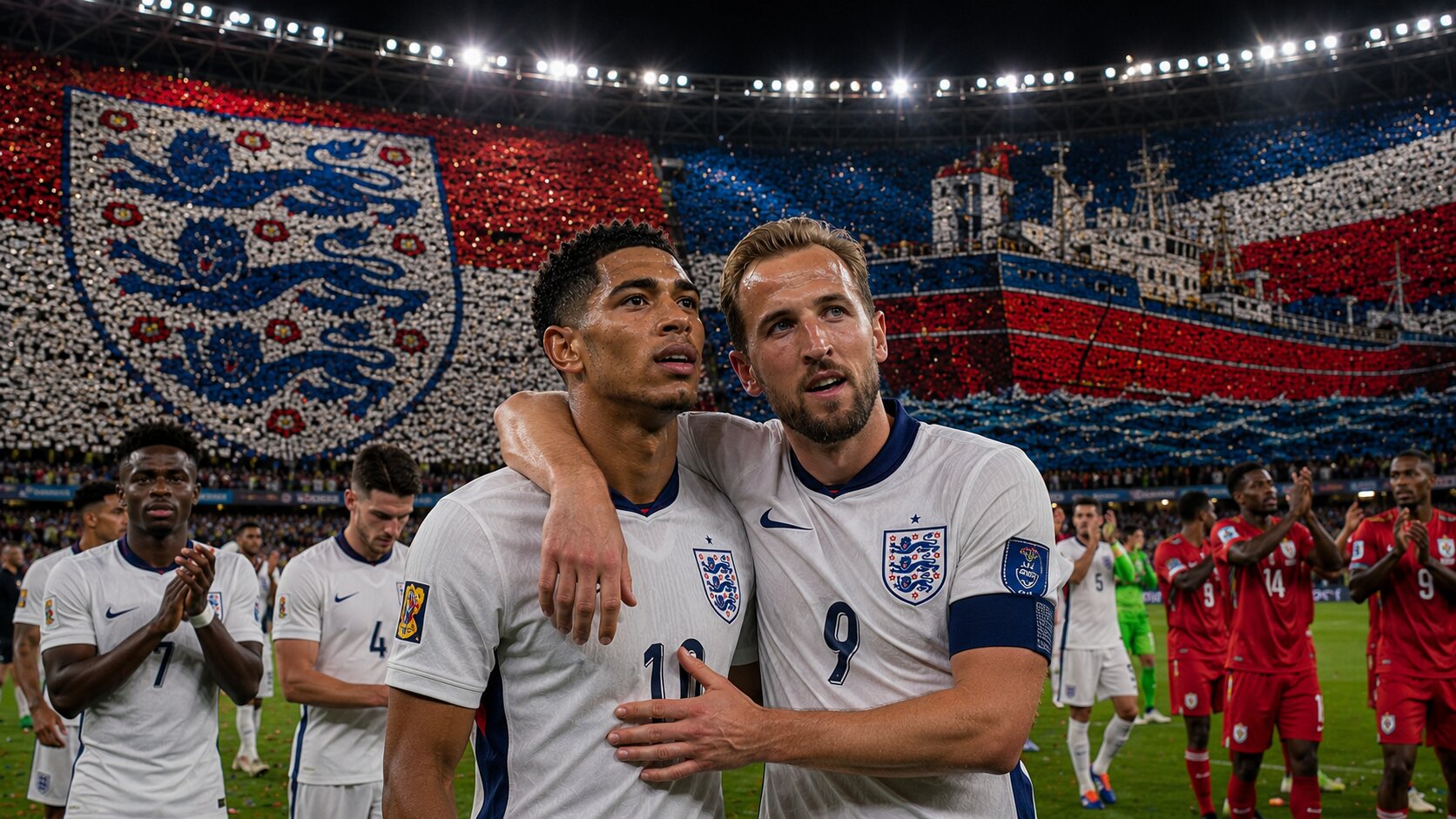
Jude Bellingham and Harry Kane came to the rescue.
Bellingham provided the energy, leadership, and decisive midfield influence England desperately needed. Kane delivered the clinical edge that continues to make him one of the most reliable forwards in world football.
But beneath the victory lies a more uncomfortable truth.
England is advancing, but not yet convincing.
And with the Democratic Republic of Congo waiting in the knockout stage, that may be a problem.
Panama Refused to Play Like a Defeated Team
Panama deserves enormous credit.
Many teams in Panama’s position might have collapsed emotionally. After narrow defeats to Ghana and Croatia, the Panamanians entered the England match knowing their chances of advancing were extremely slim.
Yet they did not play like a team ready to go home.
They defended with commitment.
They competed physically.
They stayed compact.
They made England uncomfortable for long stretches.
From the opening minutes, Panama’s strategy was clear. The back line stayed narrow, the midfield dropped into disciplined defensive zones, and the forwards pressed selectively rather than recklessly.
The goal was not to dominate possession.
The goal was to frustrate England, keep the match alive, and wait for opportunities in transition.
For much of the first half, the plan worked.
England had the ball.
Panama had the structure.
That contrast defined the match.
England Controlled Possession but Lacked Spark
England’s biggest issue was not effort.
It was imagination.
The Three Lions circulated possession patiently, but too often the passing lacked speed and surprise. Panama’s defenders were allowed to reset, shift across the pitch, and protect central spaces.
England’s wide players received the ball but struggled to consistently beat defenders.
The midfield found openings but did not always accelerate the attack quickly enough.
The result was a familiar pattern.
England looked comfortable.
England looked superior.
But England did not always look dangerous.
That is becoming one of the key concerns of their World Cup campaign.
Against Croatia, England appeared explosive.
Against Ghana, they were blunt.
Against Panama, they were effective enough but rarely brilliant.
That inconsistency may become costly against stronger opponents.
Bellingham Changes the Mood
When England needed urgency, Jude Bellingham provided it.
Bellingham was the player who most consistently tried to force the match forward. He carried the ball into dangerous areas, demanded possession under pressure, and injected tempo when England’s passing became too predictable.
His influence was not just technical.
It was emotional.
England often plays better when Bellingham plays with visible intensity. His body language matters. His confidence matters. His willingness to take responsibility matters.
Against Panama, he became the bridge between England’s cautious buildup and its attacking ambition.
The opening goal reflected exactly why he has become so important.
Whether through a direct contribution or the movement that created space, Bellingham’s presence destabilized Panama’s defensive shape and finally gave England the breakthrough it needed.
World Cups often reveal which players can carry pressure.
Bellingham continues to look like one of them.
Kane Remains England’s Safety Net
Harry Kane may not always dominate matches visually, but he remains England’s most dependable finisher.
Against Panama, his contribution was exactly what England needed.
When the match became tense, Kane provided calm.
When chances were limited, he made his moment count.
That is the value of an elite striker.
Kane does not need England to create ten clear opportunities.
He only needs one or two.
His goal gave the scoreline a more comfortable shape and allowed England to manage the closing stages with less anxiety.
However, Kane’s performance also highlighted a broader issue.
England still needs to provide him with better service.
Too often, he dropped deep to connect play because the ball was not arriving cleanly in dangerous areas.
That helps the team in buildup, but it can also leave England without a consistent presence in the box.
Finding the right balance remains essential.
Panama’s Courage Deserved Respect
Although Panama lost 2-0, the performance should not be dismissed.
The Panamanians were facing one of the world’s deepest squads and still managed to remain competitive for long periods.
Their defensive discipline was impressive.
Their goalkeeper and back line handled repeated pressure with determination.
Their midfield worked tirelessly to close passing lanes.
Even after falling behind, Panama did not abandon its organization.
That resilience says something important about the team’s growth.
Panama may leave the tournament disappointed, but it does not leave embarrassed.
The team showed pride, structure, and belief.
Against elite opposition, that matters.
Tactical Decisions by Both Coaches
England’s coaching staff clearly wanted control.
The plan appeared to prioritize possession, territorial pressure, and patience. That approach reduced Panama’s counterattacking opportunities but also slowed England’s attacking rhythm.
The question is whether England became too cautious.
Against an opponent like Panama, supporters expected faster ball movement, more aggressive pressing, and more creativity around the penalty area.
The substitutions helped inject some energy, but the performance still felt incomplete.
Panama’s coaching staff, meanwhile, made sensible choices.
They understood that an open game would benefit England.
So Panama stayed compact, protected central spaces, and forced England to work for everything.
That approach kept the match competitive longer than many expected.
The difference was individual quality.
Bellingham and Kane turned England’s superiority into goals.
Panama lacked comparable match-winners.
What This Means for England
England advances to face the Democratic Republic of Congo in the knockout stage.
On paper, England will be favored.
But this World Cup has already punished teams that confuse favoritism with certainty.
DR Congo will bring physicality, speed, and emotional energy. They will not fear England. They will likely study the Ghana and Panama matches carefully and identify a clear lesson:
England can be frustrated.
If opponents stay compact, deny central spaces, and force England into slow buildup, the Three Lions can become predictable.
That should concern England’s coaching staff.
The talent is unquestionably there.
Bellingham, Kane, Saka, Foden, Rice, and others are capable of beating anyone.
But the performances must become sharper.
Knockout football leaves no room for long stretches of hesitation.
Can England Go Deep?
Yes.
But not like this.
England has enough talent to reach the quarterfinals, semifinals, or even the final.
However, the team must improve its attacking rhythm.
The passing must become quicker.
The movement must become more coordinated.
The press must become more aggressive.
And the creative players must become more ruthless.
A 2-0 win over Panama keeps the dream alive.
It does not prove England is ready to win the World Cup.
That proof must come next.
Final Thoughts
England’s victory over Panama was professional but uninspiring.
The Three Lions got the result they needed, but not the statement performance supporters wanted.
Bellingham and Kane once again showed why they are indispensable.
Panama showed courage and dignity in defeat.
Now England turns toward the knockout stage, where DR Congo awaits.
The margin for error is about to disappear.
England is still alive.
England is still talented.
England is still dangerous.
But if the Three Lions want to become world champions, they must quickly become far more convincing than this.
Stay on top of World Cup news, results and highlights in TheWorldCup2026.com


